.webp)
Best Threat Intelligence Platforms of 2025
As cyber threats grow more sophisticated and persistent, organizations in the MENA region face unprecedented risks. From ransomware campaigns targeting financial institutions to nation-state attacks aimed at critical infrastructure, the landscape demands proactive, intelligence-driven defense. For Chief Information Security Officers (CISOs) in 2025, relying on traditional security measures is no longer enough. The key to staying ahead is leveraging Threat Intelligence Platforms (TIPs), tools that aggregate, analyze, and operationalize cyber threat data to empower timely, informed responses.
In this guide, we explore the top TIPs shaping the market this year, with a special focus on platforms tailored to the MENA region. We’ll also highlight COGNNA, a Saudi-based platform integrating regional threat intelligence with advanced AI capabilities, setting a new standard for security operations.
What Is a Threat Intelligence Platform?
A Threat Intelligence Platform (TIP) is a centralized system designed to collect, process, and deliver actionable threat data. Unlike traditional security tools that react to incidents, TIPs provide proactive insights, enabling organizations to anticipate attacks, prioritize risks, and optimize response efforts.
TIPs pull intelligence from diverse sources: open-source feeds, commercial threat databases, dark web monitoring, malware signatures, and internal telemetry. They correlate this data to identify patterns, rank threats by severity, and integrate with security operations workflows, essentially acting as a radar system for cyber defense.
Why Threat Intelligence Platforms Are Critical in 2025
The cybersecurity landscape of 2025 is defined by speed, complexity, and regional specificity:
- Evolving Threat Actors: Attackers are leveraging AI, deepfake phishing, and supply-chain exploits. Regional threat actors target specific industries, including finance, energy, and government.
- Information Overload: Security teams face massive volumes of alerts. TIPs filter noise and highlight the threats that matter most.
- Compliance Requirements: Organizations in the MENA region must comply with local frameworks like Saudi NCA regulations, GCC cybersecurity standards, and global best practices (ISO 27001, NIST).
- Strategic Decision-Making: TIPs provide executive-level reporting, helping CISOs make risk-informed choices that align with business objectives.
Key Components of Threat Intelligence Platforms
A high-performing TIP typically includes:
- Data Aggregation & Correlation: Consolidates multiple feeds: open-source, commercial, and internal, to provide a unified view.
- Threat Scoring & Contextualization: Prioritizes threats based on relevance, severity, and organizational context.
- Automation & Orchestration: Integrates with SIEM, SOAR, and endpoint tools to accelerate response.
- Visualization & Reporting: Provides intuitive dashboards and reports for analysts and executive leadership.
- Regional Compliance & Localization: Offers localized intelligence, Arabic-language support, and alignment with MENA-specific regulatory frameworks.
Top 5 Threat Intelligence Platforms of 2025
Below are five platforms delivering actionable threat intelligence in 2025, with a focus on those serving the MENA region.
1. COGNNA
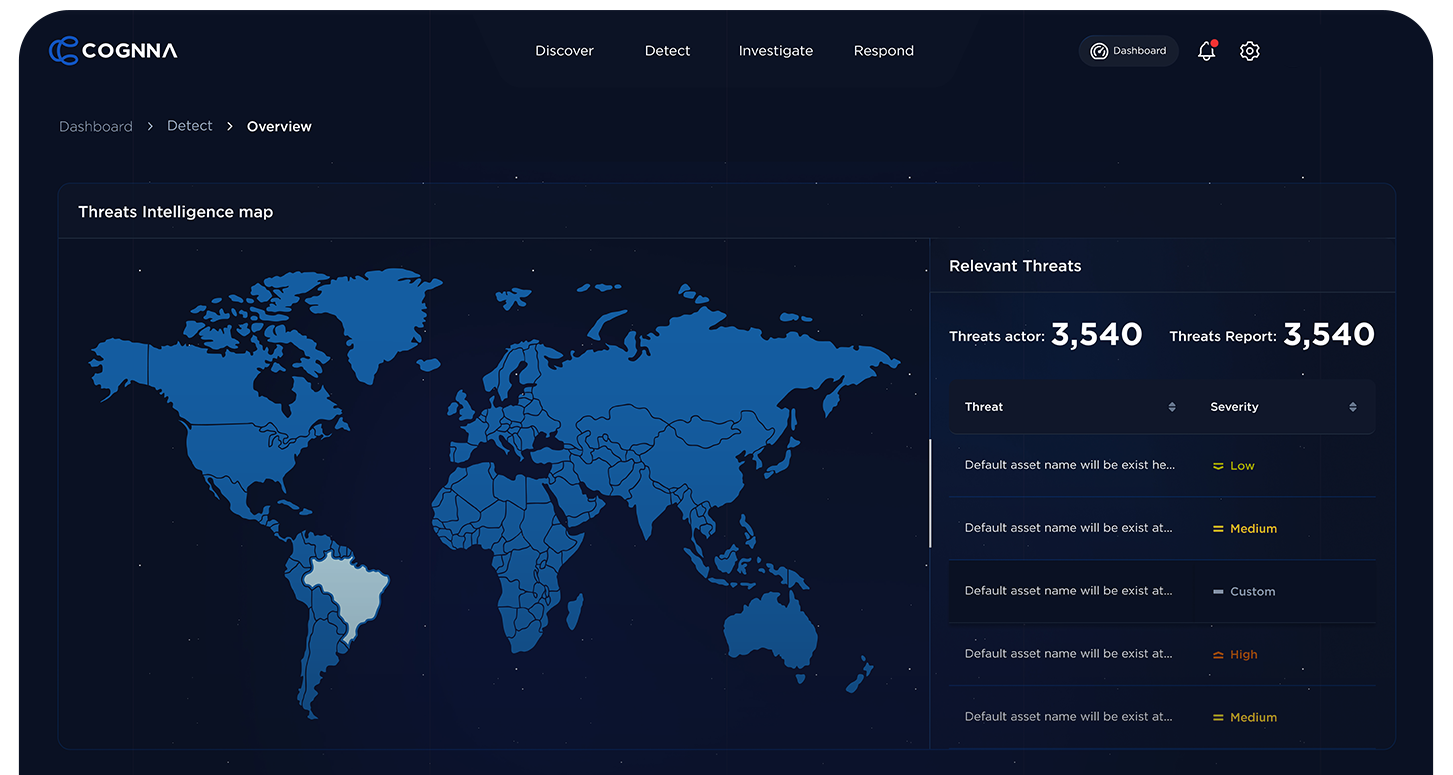
COGNNA is not a standalone Threat Intelligence Platform, it’s an Agentic SOC platform where threat intelligence is built directly into every stage of detection, investigation, and response. Purpose-built in Saudi Arabia for the MENA threat landscape, COGNNA bridges a gap that many global platforms cannot: regional relevance, real-time operationalization of intelligence, and automated SOC workflows that reduce analyst burden.
Key Threat Intelligence Features:
- Aggregation of global, regional, and COGNNA’s proprietary threat research
- Continuous threat validation aligned with Saudi & GCC sector-specific activity
- Agentic AI-powered context correlation that understands the environment it protects
- Automated investigation flows enriched with actionable threat context
- Real-time mapping of intelligence into active detections, alerts, and IR playbooks
Unique Strength:
What sets COGNNA apart is its ability to turn intelligence into action automatically. When new intelligence is ingested or validated through COGNNA’s proprietary research, the platform does more than update feeds: It automatically triggers a threat-hunting request, giving analysts the choice to run it instantly or schedule it for later.
This tight integration between intelligence, investigation, and threat hunting eliminates delays, ensures proactive coverage, and drastically reduces the chance of missed threats.
Other Benefits:
- Unified Agentic SOC platform for detection, investigation, response, playbooks, and reporting
- AI-led triage which reduces false positives for faster incident response
- Supports 24/7 SOC operations
- Compliance-aligned reporting for NCA and SAMA
- Smart MDR and MSOC services
2. CPX (Formerly DarkMatter)
CPX is a UAE-based cybersecurity firm offering a TIP integrated with advanced threat research and defense capabilities for the MENA region.
Key Threat Intelligence Features:
- Threat actor profiling and attribution
- Integration of global and regional threat feeds
- Dark web monitoring for emerging threats
- Incident response orchestration
Unique Strength:
CPX combines intelligence gathering with research-backed threat assessments, making it especially effective for government and critical infrastructure sectors.
Other Benefits:
- Supports multi-layered defense strategies
- Provides expert consulting and managed services
- Compliance alignment for UAE and GCC regulations
3. Spire Solutions
Spire Solutions is a regional provider aggregating threat intelligence from multiple vendors to offer comprehensive visibility for organizations across the GCC.
Key Threat Intelligence Features:
- Multi-source threat data aggregation
- AI-enhanced threat scoring and prioritization
- Integration with SIEM and SOAR platforms
- Supply chain and external attack surface monitoring
Unique Strength:
Spire excels at consolidating intelligence from diverse sources to deliver actionable insights tailored to the GCC market.
Other Benefits:
- Flexible deployment options for SMEs and large enterprises
- Threat intelligence dashboards with real-time situational awareness
- Managed intelligence services to support in-house SOC teams
4. Recorded Future
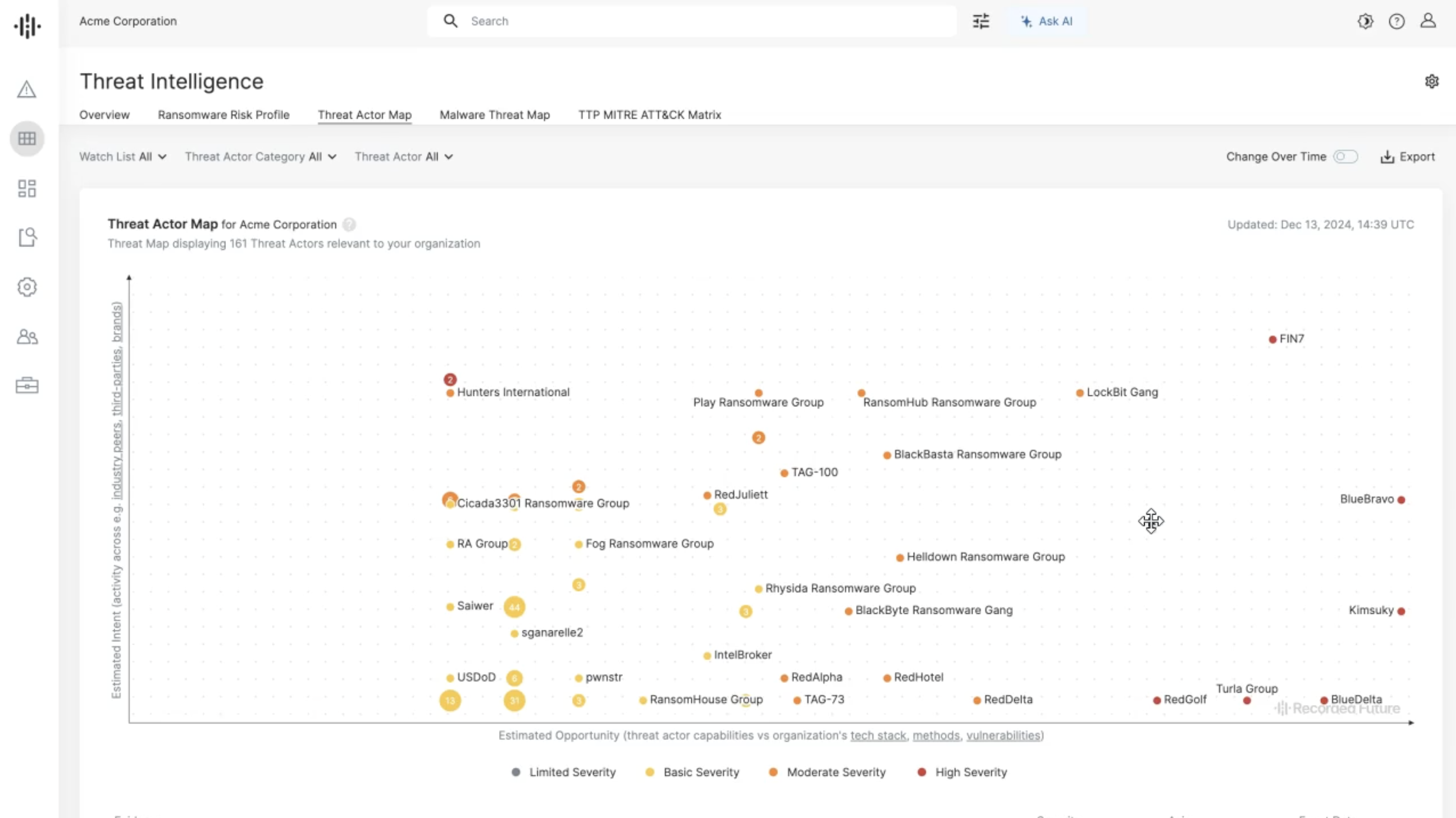
Recorded Future is a global threat intelligence platform widely deployed across the MENA region by financial institutions and multinational organizations.
Key Threat Intelligence Features:
- Real-time threat feed aggregation
- Predictive analytics and risk scoring
- Dark web and malware monitoring
- Seamless integration with SIEM/SOAR
Unique Strength:
Recorded Future’s predictive analytics and automated intelligence processing help organizations anticipate and prevent attacks before they happen.
Other Benefits:
- Supports executive reporting and regulatory compliance
- Extensive threat actor profiling and trend analysis
- Cloud-based platform for scalable deployment
5. Anomali
Anomali provides a threat intelligence platform focused on detection, correlation, and operationalization of threat data for organizations worldwide, including MENA enterprises.

Key Threat Intelligence Features:
- Threat feed aggregation and correlation
- Automated alert prioritization
- Integration with SIEM, SOAR, and endpoint systems
- Advanced threat hunting capabilities
Unique Strength:
Anomali stands out for its strong integrations and scalable architecture, enabling organizations to operationalize threat intelligence efficiently.
Other Benefits:
- Real-time dashboards and reporting
- Flexible deployment for regional and global operations
- Supports proactive threat hunting initiatives
How CISOs Should Choose the Right Platform
When selecting a TIP, consider the following factors:
- Integration: Must feed directly into your SOC’s SIEM, XDR, and endpoint monitoring.
- Regional Intelligence: Ensure the platform provides local threat data and aligns with regional regulations.
- Automation: AI-driven analysis and automated response reduce analyst workload.
- Scalability & Cost: Platform should scale with your organization without hidden costs.
- Usability: Dashboards and reporting should be intuitive for both analysts and executives.
For organizations in the MENA region, platforms like COGNNA provide the perfect balance of regional intelligence, AI-driven insights, and integration capabilities.
Final Thoughts
As 2025 unfolds, the threat landscape in the MENA region demands intelligent, proactive, and integrated defense. TIPs are no longer optional, they’re foundational for modern SOCs. Platforms like COGNNA, DarkMatter, Spire Solutions, Recorded Future, and Anomali provide the tools and intelligence necessary to stay ahead of sophisticated threats.
For CISOs, the choice of a TIP should prioritize regional relevance, integration, and automation, ensuring the organization can detect, respond, and prevent attacks efficiently. Among these platforms, COGNNA stands out as a fully regional, AI-led solution designed to meet the unique cybersecurity challenges of the MENA region.
Request a demo with COGNNA today to see how integrated threat intelligence can transform your SOC.

.webp)